The Echo of a Noise
Review: THE ECHO OF A NOISE. A One-man memoir written and performed by Pieter-Dirk Uys
– Sheila Chisholm, Weekend Special, 7 July 2017
Oom Hannes, or Pa as Pietertjie called him, threw a riot when, after matriculating, his son went to UCT to register for a “noble” teachers’ training profession. Instead, he switched to “die duiwel’s” BA Drama — and got thrown out of the house for his decision.
This was only one occasion Pieter-Dirk Uys crossed swords with his father. He loved him, but only learned to like him later — big difference. On the other hand he loved his mother deeply, German born pianist Helga Bassel. One could feel his pain as, perched alone and lonely on a high stool centre stage, he related how devastated he was, and still is, by her suicide on 26 May 1969. Those were a couple of the more serious moments in Uys’ memoirs, The Echo of a Noise, he didn’t wrap up in humour.
From the DR Church to Sophia Loren
As Uys took us through his early childhood at 10 Homestead Way, Pinelands, regularly sitting beside Pa at the organ on Sundays at the DR Church, and his passion for Sophia Loren, one story stood out. Uys talked about his Oom Andre’s “knee and hand” problem. “Oom Andre had a funny twitching knee. I was often placed beside him at meals, and his knee continually bumped mine. The more (surreptitiously) I pulled away, the more Oom Andre’s knee found mine. So too his hand, which often fell on my thigh. When I told Ma, she said nothing, but I no longer sat next to Oom Andre. Ma was one mother who listened, then acted, when told a close family member was getting too close to her child.” If more did there would be fewer abused children. Listening is vital to preventing abuse.
Disappointed Uys’ father may have been by Pietertjie studying acting rather than formally following a teacher’s calling. But it’s doubtful if there is a greater teacher in this country than Pieter-Dirk Uys. Through his acting, his stories, his Evita Bezuidenhout and Bambi Kellermann persona, he has taught countless South Africans more about the horrors of the Nazi concentration camps, the disgrace of Apartheid, and the ongoing corruption of this present government. His leading role in teaching/acting out condom use to school children has saved countless lives. Not to mention favourably turning round narrow-minded attitudes concerning people who are different to ourselves.
What a gift!
Pieter-Dirk Uys has a knack for knocking life into perspective. Even as we laughed we left The Echo of a Noise much wiser, with thanks for the gift of this teacher/philosopher/actor/satirist/humourist. Long may Pieter-Dirk Uys remain our moral signpost.
What: The Echo of a Noise
Where and when: Theatre on the Bay until 15 July
Booking: Computicket or 021 4383301
Spotlight: Pieter-Dirk Uys, the man behind the powder and The Echo of a Noise
– Barbara Loots, Theatre Scene Cape Town, 5 July 2017
Pieter-Dirk Uys, known for his sharp-witted satire and colourful characters (who to the delight of many an audience calls a political spade a shovel), steps out from behind the powder and personas to reveal the man that is the commentary in his beautifully nostalgic one-man show, The Echo of a Noise.
Recently addressing a group of drama students, he implored them, “The last thing we want is another f*cken actor. Are you going to be another actor? Don’t! If you are going to be a unique voice in theatre, you will be and the world will listen to you. But don’t be a copy, you’ll stand in the queue with lots of copies and copies never work.”
With that creative insight and understanding of uniqueness as the backbone to his career, just another actor is the last thing you will find onstage in The Echo of a Noise. Uys in fact shares that one of his drama lecturers told him, “oh darling, you’ve got no talent, you must become a stage manager”. Taking that advice, he became a fully qualified stage manager, embracing the most critical and too often overlooked job in the industry. That initial insult turned out to be a blessing that has since empowered and propelled him to become so much more than just another actor, that and being unemployed since 1975, which Uys jests “does help! I am my job, I don’t wait for a job.”
Over the years he has been described as an actor, and also an author and an activist. He however doesn’t relate to any of these labels. “I’m an entertainer”, he unwaveringly declares, “that’s what I want to be known as.”
When talking to him about the importance and the place of theatre, one soon realises why the title of entertainer is indeed the perfect fit. Uys revels in the power of storytelling.
“Theatre has been around for more than 2000 years, and it adapts to the good times and the bad times. It reflects the cracked mirror of society. We — who actually ignore what the theatre demands — will die, but the theatre will live on… It is an extraordinarily primitive and eternal means of communication. And of course in this crazy world where everybody is so stressed, there is something amazingly neutral in a theatre… It is about telling the story, and that is what I love.”
This theatrical love affair he now delicately translates to the stage in The Echo of a Noise, baring his soul to the audience through his own narrative… No Tannie Evita, Bambi or Pik. As a creative who has through the years told so many stories about South Africa through his characters, what makes The Echo of a Noise such a special theatre experience is that it shows you the man behind his unique style, because as Uys proclaims, “it is time”.
The personal journey so revealed does not only resonate with South Africans, who regard him as a national treasure, but have also been well received by international audiences. Uys tells that before this current Theatre on the Bay run, he took the production to Germany and realised why this very personal telling appeals across borders, “it is the story, it is universal and not time-based, it doesn’t have to be topical. And that is the universal heart-beat of theatre. It can go on with me forever.”
Theatre is also the right medium for this one-man conversation between Uys and his audience. “If I give them 60% they give me 40%, if I give them 40% they give me 60%”, he explains the crux of this partnership that he genuinely values. “People sit, they’ve chosen to sit there, they’ve paid for it. The most valuable thing is their time; it is not their money… It is just wonderful to look at an audience who gives me their time, and in my case [in return] I make them laugh at things they don’t want to think about.”
It also allows for a truly personal experience where Uys as entertainer can feel a connection with his audience on a different level that is more than just punchline generated laughs, which arguably television can also give them. “The camera takes everything from you and gives you nothing back — that is the terrifying thing about film — that’s why Marilyn Monroe killed herself, because there was no one there to hug her”, he insightfully comments. “That is what the life of theatre does to me. It is my lifeblood, and it is a great therapy, and it is great discipline. That is what it is, hard work and discipline.”
When you sit down at Theatre on the Bay, the experience of a great, comforting hug is perhaps the best way to describe The Echo of a Noise. That hug is an ode to storytelling in service of the theatre and in memory of the family and life that helped shape Uys as an all-round creative.
But why do you as audience member also feel the warmth and comfort of that hug? Relatability. Even though it is not your story, sitting in the audience you somehow naturally feel invested in his tale. Even if your previous Uys encounters have only been through his character Evita Bezuidenhout, you will still feel a strong connection with the story of young Pietertjie, as Uys shares his memories, because as he best phrases it, “some people grew up with [Tannie Evita] on their walls at home, the same way I grew up with Sophia Loren”.
What shines through like a theatre beacon in this show, is that — regardless of the sadness and loss he has experienced throughout his life — he lives and performs with a clear, jovial mind-set: “49% anger, 51% entertainment, not the other way around, because shouting doesn’t work.” Uys explains that the decision to always let positivity triumph is based on a “tremendous belief in goodness, optimism and hope. What is the point of falling prey to negativity? And the theatre by nature is optimistic”.
In elaborating on this character trait that he shares with theatre as an art form, he ponders why Les Miserables as a musical came into being. “What?”, Uys excitedly exclaims as he dramatizes the moment of its conceptualisation, “About the French Revolution? Nonsense!” he declares. “And then it comes together… so everything about it says it’s not going to work, but then there is one thing that says it will work and that is the imagination! It’s going to work! And it does work! So theatre is every night when you come in and you think, ‘It’s going to work!’ I’m an addict, a terminal optimist. Not that I pretend to be Julie Andrews or Doris Day,” he with great respect to the dames qualifies. “Sometimes I think my definition of optimism means I expect the worst, hoping that the worst will not be as bad as I imagined. And so far, so good.”
Given that The Echo of a Noise is so balanced as a show, both filled with realism and depth, while presented with positivity and imagination, what then is a highlight moment for Uys himself when performing it?
“I think the most wonderful moment”, reflecting on his playwright ‘relationship’ with the literature police during the apartheids era, “is to say what the lady typist at the Censor Board typed… ‘Mnr Uys, u spel die word f*k met ‘n f, nie ‘n v nie’… and the whole audience just … *gyuh* … it puts it all into a nutshell. It puts censorship, it puts fear, it puts power, it puts swearing, it puts EVERYTHING together… you could practically see the frown in the letters. ‘If you want to do it you must do it proper, dis die taal!’”
Apart from that uber pedantic and highly entertaining linguist from his past, you will also see the very personal side of Uys, which includes his conversations with a cat on Table Mountain, seeing his sister follow in his parents’ footsteps to become a great pianist, as well as learn more about his fascination with and love for trains. That love ultimately led him to his home (and own theatre, Evita se Perron), in the quaint little town of Darling. Drawing on that part of his life, he shares that he is now working on a new show called, When In Doubt, Say Darling.
But that is not all audiences can look forward to from Uys in 2018. When people walk out of The Echo of a Noise, they want to hear more about the heart-warming and poignant stories as seen through the eyes of Uys, something you but get a glimpse of in the show itself. As he admits, if he shares more (or all) details onstage, then that glimpse would turn into a 14 hour long show. So to give people more than but an echo, he is currently working on turning it into a beautiful book, incorporating the script itself alongside more details and pictures.
It is exciting to listen to Uys talk about his past and future projects with so much passion. He is truly a walking example of why theatre will never fade or die, because entertainers like Uys will always have stories to tell. I for one can’t wait to put my pre-order in for the book that accompanies my favour Pieter-Dirk Uys show to date, The Echo of a Noise. You can experience this insightful one-man show at Theatre on the Bay until 15 July 2017, with tickets available at Computicket.
Uys’s ‘Echo’ sounds beautiful
– Orielle Berry, Cape Times, 13 June 2017
ONE of my favourite stories about Tannie Evita is how she would “mince” down Station Road in Darling on her way to the Perron, on her high heels, dressed up for her role on stage. As she passed the NG Kerk, a landmark to what platteland conservatism is all about in this West Coast part of the world, the mense emerging from the morning service would greet her warmly, shouting across the church yard: “Middag Tannie. Lekker dag.”
While the above may sound like an urban legend, it’s true. One of the remarkable things about a village like Darling is that even in the old days, when Pieter-Dirk Uys moved there 20 years ago, it didn’t take long for him to creep into the hearts of the villagers, verkrampte or not. In the first years of the new millennium, Uys and I were virtual neighbours, living 100m apart in the same road in our respective, renovated, Victorian-style houses.
And when you live in Darling, it’s inevitable that wherever you go you see him, either in civvies or in full costume at the theatre as one of his alter egos. Usually it’s Uys, beanie on head, going about his day, walking to and from the local Spar.
Darling over the years has played host to dozens of events featuring the country’s most well-loved woman. One of the most memorable was how the town turned out a few years ago to watch her open Tannie Evita Boulevard, close to the Perron.
As she was driven slowly up the Hoof Weg, in a topless vintage car, sitting on the back seat flanked by two of her many grandchildren, the crowds lining the road cheered and clapped. As one of the veteran residents said at the time: “Where else in the world would you get a street named after a non-existent woman?”
This year sees Uys celebrating 45 years on stage, and in The Echo of a Noise, which returns to the Theatre on the Bay later this month, there will be no alter-ego, no Tannie Evita, just Uys as himself.
It was certainly not the first time we got together for an interview when we met at Arnold’s on Kloof Street last week to chat about his life in theatre and his solo, contemplative performance.
Looking back so personally on his life, there are issues that still cut deep, and Uys says: “It’s been amazing to have written a whole show without writing about politics.”
The Echo of a Noise had a soldout season at the Theatre on the Bay last year, in which audiences were taken through this frankly told journey of his life.
Drinking a cup of his favourite brew — rooibos — with a blue beanie on his head, Uys’s eyes sparkle. In his illustrious career, Uys says he’s performed on the stages of the world more than 7 000 thousand times.
“But I have learnt that every show is the first and the last performance — because each audience demands and gets a different energy, topicality and excitement.”
In Echo, there’s none of the silky repartee of Tannie Evita nor the smoky drone of the sexy Bambi Kellerman.
“For almost two hours I sit on a bar stool, and there’s no interval. I just talk — there are no costumes, and it’s all so refreshing,” he says.
Now in his 71st year, he says those signposts that have subconsciously pointed him in the right direction, without measuring up successes or failures, may be rooted in the fact that as a child there was no losing.
“My mother would say at the eistedfodds we’d perform in, where Tessa would play the piano and I would sing, ‘if you win you get one ice cream; if you lose you get two’.”
In the play there are no holds barred as he relates events from his past — his difficult relationship with his father Hannes Uys who, he says, threw him out of the house as a young man but also taught him to laugh at fear. A father he loved but didn’t like, who was his sternest critic but also gave him some sage advice.
As we chat he also remembers Sannie the housekeeper whom he unfolds on stage as “the woman who loved us to laugh at her, and cooked like a dream and was my Cape Flats mother”.
When he first appeared on the stage as a satirist in the 1970s he was a lone voice in the wilderness. He reveals how it all started.
His mother escaped Nazi Germany and arrived here on the eve of World War II, and met Hannes at a Mozart concert at the Cape Town City Hall. Uys quips: “You can blame Amadeus and Adolf for my parents meeting.”
At a moving performance last month, Uys performed Echo at the Jewish Museum in Berlin, standing at the piano his sister Tessa donated to the centre.
The personal and public meet as Uys leads the audience into his world, revealing details about his grandmothers, his teachers and his passions which, among others, include Sophia Loren, who he has met on several occasions.
While Uys has undoubtedly always been his own person, he says that since the age of about 60 he has learnt the meaning of the word “no”, and today at 71, he says, “life is so much easier as I don’t have to please anyone”.
He’s always known the value of filling the empty spaces with words, hence the name of the production.
The Echo of a Noise is at the Theatre on the Bay from July 5 to July 15. Booking is via Computicket or 021 438 3301.
‘Noise’ my menslikste stuk — Uys
– AJ Opperman, Netwerk24, 12 Junie 2017
Min politiek en baie verbeelding.
Dít dink Pieter-Dirk Uys is die rede hoekom sy outobiografiese The Echo of a Noise op aandrang van die publiek weer terug is in die Pieter Toerien-studioteater by Montecasino.
In die stuk praat Uys openlik en meevoerend oor sy verhouding met sy pa, Hannes.
“Miskien is dit dat almal hulle eie storie kan saamweef met myne, al is ons van totale anderste agtergronde. En dit gaan oor die storie. Dis mos die hartklop van vermaak.”
“In Echo is ek sonder enigiets, net my storie. En die wonderlikste Hollywood-ateljee op aarde: almal in die gehoor se verbeelding.
“Die lewe is nie net stroef en swaar nie. My ondervinding sover is dat dit miskien die menslikste stuk is wat ek al ooit opgevoer het, want almal het ’n pa, ’n ma, ’n jeugdige droom met lag en lekker, soet en suur.”
En mense deel hul reaksies. Soos ’n man van 60 wat in trane met Uys kom praat het oor sy pa en mense wat ook deur bipolêre nagmerries is en wat familie weens selfdood verloor het.
“Dan was daar kinders van 11 wat gesê het: ‘Die prente was pragtig, Oom.’ En as ek antwoord dat daar nie prente in die stuk gewys word nie, antwoord hulle: ‘Nee, die prente in my kop.’ That’s magic.”
* Vertonings is op 14 en 15 Junie om 20:00, 16 Junie om 15:00 en 17 Junie om 16:00. Kaartjies kos R100 tot R180. Bespreek by Computicket.
This time it’s personal — Pieter-Dirk Uys’ one-man memoir comes to Johannesburg
– David O’Sullivan, BizNews.com, 3 April 2017
Pieter-Dirk Uys can be accurately described as a national treasure. For the past five decades, he’s been taunting the authorities and entertaining audiences with his sharply observed plays, revues and films. He’s created many memorable characters, most notably Evita Bezuidenhout, who has become as much part of the national psyche as Uys himself. If ever theatre has been used to hold a mirror up to South African society and show off all its blemishes to comic effect, it’s been through Uys’ finely-honed social observations and comedic instincts. In his latest show, the highly-acclaimed one-man memoir The Echo of a Noise, Tannie Evita is there only in spirit as Uys takes audiences on a more personal and intimate journey. Gone are the masks, the eyelashes and the personas, and Uys takes audiences on a journey into his public and private life. He shares the personal mythologies and histories that have led him to the stage, and tells of the influences in his life — his father Hannes and mother Helga, his grandmothers, his teachers and his passions. Uys describes it as a tale of “a boy who was stricken by the disease to please from an early age, overshadowed by church and school and a very strict father.” The Echo of a Noise has played to sell-out houses both at its premier at the National Arts Festival and the Theatre on the Bay in Cape Town. Now it’s on in Johannesburg at the Studio Theatre Montecasino until 9 April. David O’Sullivan talks to Pieter-Dirk Uys about his new show, which he’s described as one of the funniest and emotional he’s yet written.
Pieter, the Echo of a Noise has been performed to great acclaim, and now it comes to Johannesburg. It’s described as a ‘one-man memoir’. What does that mean?
Well, for the first time ever I have walked away from all my security blankets — there are no false eyelashes, no high-heeled shoes. There’s not a Zuma or a Botha, or even Evita Bezuidenhout — although there is a hint of her because basically it is the story behind the stories. I never thought I would really tell the story of my relationship with my father and my survival through the years of National Party fake news which actually gave me all the material that I needed to make fun of them in those old apartheid days. And so this is really and truly the first time I am unclouded rather than unplugged and really it is about my father and also our maid — it’s funny to call her that because Sannie Abada was like my Cape Flats mother for so many years. So I had extraordinary influences from her and also from the reality of being a young, white, Afrikaans, Calvinist South African boy who just had to try and find his own way through the quicksand and the minefield. So The Echo of a Noise was an interesting title, but I am not sure what it meant. Did it mean that I am the echo of a noise past, meaning “has been” — which is possible? Or am I the echo of a noise re-inventing itself for the future, which is also possible? Or it is the echo of the noise of laughter at things that were not allowed to be laughed at? It could be all those things. But it is just me and the audience.
Well I have been re-reading your memoir ‘Between the Devil and the Deep’ and I have got a lot glimpses into the struggles of you as a young boy. One of the images that was quite stark for me was of you as a young boy in church, the Dutch Reformed Church, singing in the choir and in the front row is Hendrik Verwoerd and his wife. And immediately we’ve got this clash of this youngster who will one day become rebellious and speak out so vocally against the system that this man created, and yet there you are singing for him at an early stage. What are your memories of that?
Oh vivid, extraordinary. I mean there we were in the choir, my father was the organist in the church and we would sing very beautiful classical choral music which actually were based in Catholic religion which was a wonderful thing to know because my father translated them into Afrikaans and they were sung in a Dutch Reformed Church environment which was so anti-Catholic, in fact anti so many things. So there was our Prime Minister and his wife and we sang the national anthem and well you know — that’s what it was. You must remember that in those days there was no television, there was no freedom of expression, and I grew up in a family that really and truly had very little energy for politics because they were musicians, pianists, and so it was Mozart, Beethoven and Schubert and not Verwoerd and Jan van Riebeeck. And yet ironically I also had a photo of Dr Verwoerd on the walls of my room because we were just, I suppose, brainwashed at school and even in church that Verwoerd was a gift from God. And my friends had pictures of Verwoerd on their walls, but they also had pictures of rugby players as well. But I did not go that far. However, I did find a picture of a very beautiful Italian film star called Sophia Loren, and I put her on the wall next to Hendrik Verwoerd and the next day Hendrik Verwoerd fell off the wall. So Sophia Loren saved my life.
What was it like in the home environment? You describe your background as being Afrikaner Calvinist and Calvinist implies that there were strict rigours, but you’ve got these two parents who are musicians and one expects that this allows them to be more open-minded and more creative. Your sister, Tessa, was also an incredibly creative person. Were there artistic freedoms, even as a youngster or was your upbringing terribly Calvinistic and structured?
No, it was not structured in that way. It was disciplined, it was respectful, and as kids we just did not ask questions. I think many young people in those years just were not free to ask questions. I just wished that I had because there were so many areas of my family life that I still don’t know about I mean the irony is that I honestly know more about Sophia Loren’s family than about my own family. There was the fact that my mother, only after she died did I find out that she was Jewish. I mean, come on, how crazy is all that? And yet when I look back at her relationship with me and my sister and the wonderful freedom she gave us through her sense of humour and without actually spelling out the reality of having to leave Germany because she was Jewish in 1937, and coming to Cape Town and the first piano job she got as a professional pianist was on the stage of the City Hall playing the two Mozart piano concertos with a pianist called Hannes Uys — and that’s where she met my father. You know, so my constant reminder of that is to thank two people for being here today. The one person I thank is Amadeus and the other is Adolf. So actually no I must say my family had a very open-minded and enjoyable relationship with us as children, but it was hard work. We weren’t rich. I certainly never thought that we poor but we certainly did not waste money or show off, my father was very strict on those things. So yes, listen, I come from a very happy background and the change in my life came purely because I think I realised that the life I was leading was not the life that was acceptable in a context of goodness. I mean how can people be treated as second-class citizens because they were not white? I think that is the first question that bothered me. In Sunday School, the NG Kerk dominee said you know if we were good Afrikaans children we would go straight to heaven, and then somehow he said that all the good little black children would also go straight to their heaven. I think that this was the first time I had to try and work out why there were two heavens.
What was it about your upbringing that allowed you to question, and allowed you to rebel. You had this daily drug that you called the theatre, but against you father’s wishes you go and enroll at UCT, the liberal, communist institution and not Stellenbosch University. Why do you think you were able to break the shackles like that?
You know I think it was just a very childish thing. I think I just wanted to piss off my pa. I think I wanted to irritate all the Ooms and all those people in the family that had their stiff upper lips, and they were all involved in the National Party. My father’s one cousin was Dr D F Malan, I mean that’s where his part of the family did come from. He also did not like them quite frankly. My father had no time for this Broederbond stuff. But again no politics was discussed at home. I just think it was…I wish I had an answer to that, because people say ‘why did you do it, did you just realise’? But no, it was just instinctive, I think I just felt that was one way to get a reaction out of people, a reaction of irritation, which meant that I was winning some battles. And I think I was being very silly in the beginning, even in my satirical work I was making fun of obvious things and using swear words to attract attention. But one thing sort of led to another and eventually I found that definition of 49% anger and 51% entertainment, because most of my material is anchored in the anger of paralysis. What can I do as one person in this country when so many things are going wrong because so few of us are standing up and saying what can we do to change things?
How are you addressing these issues in The Echo of a Noise? Do you spend much time in the show dealing with this stage of your life?
Do you know, I spend a lot of time actually trying to navigate myself as a person through the minefield of fear and of questions. And suddenly the big change in my life came when I did go to UCT to do a BA Drama because I wanted to be a teacher. And Pa was very pleased, my father was very thrilled about that, and then I got diverted into BA Drama, meaning I suddenly ended up in drama school, meaning that my father blew his top because he said “this is not a future”. And I think that’s where the first cracks started coming. Then again my lifestyle was definitely not something that my father really appreciated in any way and I had friends that were very verbal and very camp and sometimes extremely homosexual, which was also illegal and something never spoken about. So I suppose that’s where the break came, and in fact eventually my father threw me out of the house when my writings and my plays attracted the attention of government and police. But then we found each other again. You know once a cheque came in at the end of a week, after a week’s season in a theatre and it was a hell of a lot of money, and suddenly my father realised ‘oh my gosh, he’s making money doing these terrible things’. And he said to me ‘come home’ and so we started a new relationship. So all that is the journey I take the audience through, although again I must tell you the wonderful discovery for me is that my story which for me I honestly did not think I would do other than one night at the festival, has appealed to so many hundreds of people who have come to me and said ‘Do you know it’s my story as well. I saw my father, I saw my mother, my sister, my fears.’ I suddenly realised this is a totally universal backbone to so many peoples’ lives. We all have been there because of our family lives and we see what we remember and we see what we’ve missed. Many people actually miss family life today because it’s not what it used to be, Families are not sitting around a dinner table any more, they sit in front of their cell phones. It’s wrong!
Do you confront the issues of when you were performing and when your plays were starting to get banned, starting to get recognised? There was a notoriety and popularity that came with that. Do you talk much in the show about those times? On one level you’ve got the Publications Control Board as the best PR agent you’ve ever had, but at the same time it’s very frightening. You’ve often spoken about the Gestapo-like security police barging in and shutting down productions. I would imagine on one level there’s deep fear of the consequences, and at the same time it’s the kind of reaction you would want to provoke. What is that like and is that addressed in the show?
Well you know the fear is a very dangerous thing because I then started realising that being a white South African gave me an extraordinary amount of strength to push the edge of the envelope. I realised then that if I was a black person I would not have that freedom. That was also something that inspired me to be extremely careful. And I think using characters, and I think again Evita is an extraordinary clown character because the moment I created her, and there she was a member of the National Party with her husband an MP as my enemy number one. Evita used to make statements to the media that Pieter-Dirk Uys should be locked up because he was a communist and a terrorist and he wears women’s clothing and he’s ridiculous and he is “onkristelik”. I had many confrontations with people in uniform and people who were obviously there to do damage to me when they suddenly started giggling and said “could we have Evita’s signature?” I don’t know quite how to explain that but I suppose one tried to use the cartoon and to use a punch line to save one’s own life. And again I was very careful about not being a great freedom fighter. Instinctively I did not take sides. I was not a liberal against the National Party government and I wasn’t a Broederbonder against the liberals. I gave everybody a chance to make a fool of themselves. And I think that certainly gave me a centre line to walk and not suddenly trap myself in a political cul-de-sac.
Well I was a young journalist starting to make my way in the world of journalism in the time that Adapt or Dye was coming out. It was also at a time when people who spoke out were immediately silenced by either being banned or being locked up, or they went into exile. And I remember so starkly that you were one of the few people who could criticise government and almost get away with it. There was a political statement that was being made that was so powerful at time when there was so much silence. You were clearly aware of the incredible role that you were playing at that time.
I was not aware of it at all. I was completely oblivious to any of that. You know, I just knew from a performance point of view my show must go on. From a performance point of view I must not be late. From a performance point of view I must be arrested on stage or murdered on stage, unless the lights are on so at least the audience gets their money’s worth. And I had to keep a sense of humour, realising that laughing at these people actually makes them very uncomfortable and they really don’t know how to fight. We’ve seen it with Donald Trump. Make jokes about Donald Trump and he tweets all night, which means we can keep him awake for the next four years. It is a wonderful weapon of mass distraction, humour. Again I make the difference between comedy and humour. Comedy is the joke. Believe me there is nothing funny about apartheid. There is nothing funny about the terrible things that apartheid was doing to so many people, but there was something very, very darkly humorous about the lies and the publicity and the pomp. The terrifying brainwashing that was happening through the church and through the education system and through the fear that people were being confronted with. So now that I’ve got answers to all those questions, now in these days that we speak, but believe me, at the time I did not analyse it. I really did not give it any intellectual basis. I just knew instinctively as a performer what works and what doesn’t work. I was also very careful not to go the Penny Sparrow route because the reaction was the same as it was here. I keep on saying to people, if I had said the things straight out against the apartheid government I would have been stopped. And that’s the one thing that my father taught me, and that is what I also talk about in The Echo of a Noise and that is my father gave me a small signpost that changed my life. He said to me at one stage ‘Don’t always stick your finger in my eye, don’t always offend me within ten minutes. Why don’t you tickle me behind my ear with that finger and then I will turn my head around to see what is giving me such a good time and my eye will find your finger’. In other words, don’t always be obvious, find interesting ways to diffuse the tension. Like using Evita Bezuidenhout, she looks like a very sexy Afrikaans lady with good legs, and while you are thinking that, she is saying all the things you don’t want to hear. So it was a way of finding a dry pathway through the marsh land of prejudice, and that’s where I have my story and my dad’s involvement with what I was doing.
In The Echo of a Noise you said that Tannie Evita doesn’t make an appearance and that none of those characters that were so important in that you were able to express the bigotry, the racism through these characters and bring it to stark prominence, they are not in the show itself. Do you talk much about them in The Echo of a Noise?
Of yes, of course, they all sort of pass through and pass wind, and pass through the picture. I mean one is very aware of their power and also the fact that their involvement with my alphabet was very important. I mean I had to focus on exactly the reality of what was happening. But I think it was the anarchy, the sexual anarchy where I play different sexes, political anarchy where I took different sides and the nonsense of both sides, the liberal side and the totalitarian side. And really to be the big word that had to make sense is the word ‘entertainment’, not speech-making, not attack, not wagging the finger — I let P W Botha wag the finger, that made people laugh. But the fact that he wagged his finger and said things that he was saying on television made people laugh and made people say ‘hey, but he said that, that’s not right’. And then they would start thinking. I mean usually one would always hope that people would leave with some thought in their mind that we can and must do something where we are. We can’t wait for politicians to change the world. Nelson Mandela was still a banned person in a dark corner, we didn’t even know what he looked like. We did not know that there was light at the end of our tunnel because our tunnel was curved. So really and truly during those years I never thought for a moment that we would get away with apartheid. I thought that we were in for the most terrible bloodbath. God, I am so glad that I was wrong.
Well there were so many incredible shows which were able to put a mirror up to South African society and expose not only the madness but also the evils that lay within it. When you look at society now and you look at the political developments, when you look at the political stage at the moment, there is so much for you to say and do. Are you ever tempted to get back into the satirical review situation and get those characters commenting about what Jacob Zuma is saying? I mean I look at what he was saying in Parliament in that it will be a “funny democracy” if he sacks (Social Development Minister) Bathabile Dlamini. I just thought how much you would have been able to use something like that in a stage show.
That is so funny ‘it will be a funny democracy if he sacked Dlamini’ — I mean, it’s wonderful. That’s why I don’t have to make up anything. That’s why I don’t pay taxes, I pay royalties. It is just too good to be true. I mean the material is brilliant but it is so different. It is material of corruption, of carelessness, of arrogance in a democracy. That is not the same as the material that led to the death of people on a daily basis, the crippling of people’s minds, the destruction of peoples’ dreams and the legacy of horror that we still sit with today. So I am very careful not to say that I am back in business again because it’s the same. It’s not the same. And I think the person that I point my finger at the most nowadays is not the politicians but the voter who is not doing his job. The voter who doesn’t vote, the voter who doesn’t do homework, the voter who doesn’t understand who is in politics and just says ‘what the hell, I’m not going to be bothered’. You know every democracy deserves the government they get and we have certainly deserved the government we have at the moment. I do also know that there are some very, very good people in the African National Congress who are deeply concerned about what’s happening. And let us hope that they will work hard behind the scenes to try and find a way to suggest that Mr Zuma, our President, may retire for health reasons with full amnesty and go back to Nkandla. And we can start from scratch and sort the world out. But I am happy to tell you that Evita Bezuidenhout is a member of the ANC and they deserve her.
What was it like preparing for The Echo of a Noise, writing it, confronting the fears of the past? What kind of a process was this for you? Was it an emotional process for you?
You know the most important discipline in structuring this piece is to not put everything in it. I’ve got so many stories and terribly funny moments. Listen, I must tell you that The Echo of a Noise is probably the funniest piece of work I have done for a hell of a long time because it is about all the things that people recognise. All the really absurd and wonderful things that happen in families and to young people and to parents and children. But I couldn’t put everything into this, I had to really discipline myself to bring it in at about 90 minutes because you can’t go on for ever. That was the biggest discipline. There were moments that I suddenly stopped and I just thought ‘oh, I don’t want to go here’, when I talk about my mother’s suicide. I mean that is really, truly in any persons’ life where that happens, you never recover from something like that. But it was important for me to share moments like that and there are moments like that in the piece, yes definitely, have to be.
And do you have moments, one of the funniest things that I found when I was re-reading your book. I had forgotten you had to go to court, and at issue was the meaning of the word “genotskrots”. How mad is that? A word you had invented, and now they wanted to ban the word because it was seen as obscene.
Yes, that’s a wonderful piece in The Echo of a Noise. This marvellous fan club that I built up called the Publications Control Board, and they would not leave me alone. And that’s where my father actually in one of those conversations we had said to me ‘don’t take them seriously’ because by that time he was also a member of the censor board. I mean isn’t it wonderful that I got my dad to become a member of the censor board while they were actually banning my plays? And he actually said to me ‘don’t be frightened of them, they are idiots, they don’t know what they are doing, make fun of them. MAKE FUN OF THEM!’ And so I think that is the one reason that I actually then learned the whole Publications Act by heart, the whole law, I learned it like a monologue from Shakespeare and I could trap them with their own law. You see this is the thing that you must realise even today looking at Minister Dlamini, politicians don’t know their laws. I mean you can really catch them out constantly. And so this one play, Die Van Aardes van Grootoor, which was filled with swear words, except they were not swear words but ordinary words that sounded rude. Words like boerewors — you say that with a gender and you can be arrested, you know boere wo-o-o-o-rs. And then of course making up words that sounded rude in Afrikaans, like genotskrots. Well it means nothing but, my god – -hy gryp aan haar genotskrots. It really and truly had some great potential. And the Censor Board fell for it and I mean it just made for wonderful and uproarious laughter at their expense. That was the drug of choice. The drug of choice was laugh at your fear and make that fear less fearful.
So The Echo of a Noise in conclusion, Pieter, is called a one-man memoir. It’s not a play, it’s not a review, it’s a memoir on stage. You say it’s one of the funniest pieces of work, at the same time I would imagine that there is a sub-plot to that and there is a lot of seriousness to it as well.
Well it is extremely serious because it allows itself to smile at the pain. And I had to find a word for it. I couldn’t call it a review. People ask if I play the narrator. I don’t play anything, I’m me, that’s me there. So it is really and truly the first time that I am there as they say ‘the emperor has no clothes’ and you’re damn right, this emperor sits there with no clothes on. It’s been a fabulous experience and I really look forward to bringing it to Johannesburg. It’s never been there and so I am really looking forward to my season at the Monte Casino Pieter Toerien Theatre at The Studio.
Theatre Review: ‘The Echo of a Noise’ is quietly poignant
No wigs, no heels, no attempt to be somebody else, just the man and his memoirs for an hour and 40 minutes. Pieter-Dirk Uys’ one-man show The Echo of a Noise is his most honest and wonderful performance.
– Lesley Stones, Daily Maverick, 28 March 2017
There are times, when Pieter-Dirk Uys is fluffing around playing his various characters, that I don’t find him terribly entertaining.
This esteemed actor is widely hailed as a national treasure, yet even the grandest monuments grow dusty and fade past their prime. But I was wrong.
Perched on a barstool under a spotlight on an otherwise empty stage, 71-year-old Uys can still hold an audience absolutely mesmerised just by talking.
No wigs, no heels, no attempt to be somebody else, just the man and his memoires for an hour and 40 minutes that passes in a flash. His one-man show The Echo of a Noise is the most honest and wonderful performance I’ve ever seen him give.
He’s dressed all in black — with an elfin face that transforms into a goblin with a wicked smirk — starkly highlighted between the sweatshirt and a beanie. He’s vulnerable, frank and lucid, and the audience serves as his therapist as he rakes over the embers of a lifetime of adventure. He has a deep trough of stories to delve into, and a brilliant flair for taking out each gem and polishing it for presentation.
Uys was born into a musical family and has been performing since he was a weedy soprano. He speaks of his father Hannes, a man whom everybody loved and liked while young Pieter-Dirk was cowed by him. Of his mother, Helga Bassel, who committed suicide one day. He remembers the note she left, all 12 words of it, and talks it through in a factual but poignant and hopefully cathartic way.
The setting is monochrome, but the pictures he paints are full of vivid colour. He talks in rich detail of their Cape Flats cook and cleaner Sannie, a strong influence who showed him a way of life hidden from white suburbia. He makes us laugh with tales of perusing his idol Sophia Loren, and facing down his fears to challenge apartheid.
As a young man Uys became part of the subversive theatrical world determined to defy the rules of segregation. He jokes about the censor board that tried to muzzle him, with its ridiculous rules that even banned a meaningless word he had invented.
He speaks with controlled sorrow of his father’s decline, when peace was made and a lifetime of antagonism smoothed over.
He’s a magnificent raconteur in this small and intimate show, where the audience gets to see the man, not his brash alter-egos of Bambi Kellerman and Evita Bezuidenhout.
Looking back over the evening, there was no mention of love in his life, except for the love of his mother and his fantasy love for Loren. Is there an entire slice of life that Uys has failed to experience or shied away from? Or are there more tales to be told? You may feel like the man has revealed all, but there is still much more to know.
The Echo of a Noise runs at Montecasino’s Studio Theatre until April 9, then Cape Town’s Theatre on the Bay from July 4-15.
The well-lived life of a boy at 71
– Pieter-Dirk Uys, City Press, 19 March 2017
The Echo of a Noise is the story of a life well lived — a boy from Pinelands who grew up in a fractured society but was blessed with parents who brought music and love into the family.
A boy who was stricken by the disease to please from an early age, overshadowed by church, school and a very strict father, and yet finding inspiration and excitement through his fantasies and imagination.
The topics in the story will be shared by most of the audience: father, mother, sister, cat, swapping comics, seeing movies, Mozart, Sophia, something called sex, something named death, something remembered as love, laughter and maybe a tear — but throughout all the familiar noises of life that eventually create a symphony of celebration.
I have never had the courage to come out from behind the masks and facades of the many characters I have performed on stage more than 7 000 times.
They were mainly there to focus on political madness and mirth.
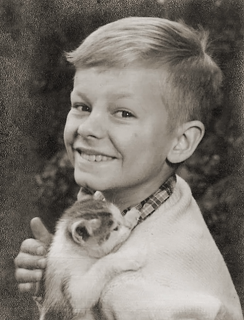
This is the first time I tell the story behind the stories. Maybe turning 71 has given me the thumbs up to share the secrets and let the cat out of the bag.
I think the restrictions I was faced with as a writer and performer, especially during the National Party years, helped me to create possibilities of confronting them through unexplored avenues — in my case, using humour as a weapon of mass distraction.
To laugh at fear could help make that fear less fearful and, let’s face it, our lives in South Africa during the 1950s, 1960s, 1970s and 1980s were shaped by fears. Laughter was a relief.
It still is.
And Evita Bezuidenhout was just one of those characters who eventually stepped out of the satirical cluster and became the most famous white woman in South Africa — then and now.
Of course, reactions to my work have changed over the years.
I expect my audience to change reactions from performance to performance because the material is based on the news of the day and, often, the prejudices we all have to face when confronted with so many choices, especially in this democracy that constantly demands change of mind and opinion.
Theatre is live; news is live — yet entertainment demands more than just headlines.
My characters have to be familiar and representative of the many areas of conflict. I try to keep to the balance of 49% anger versus 51% entertainment.
Then and now.
I’ve been doing what I do since 1968 — it is a full-time commitment and, because it is always reinventing itself, theatre keeps me on my toes and living in the moment.
The great library of stories that have been shared from the stage has done so much to allow us in the audience to confront the drama of life, of relationships, of pain, of turmoil and strife.
And, of course, the release of tension through laughter, either via comedy or humour.
Politics has today become pure theatre, but I would rather stick to the stage than be brained in Parliament by a flying red hardhat!
⦁ Uys’ one-man memoir, The Echo of a Noise, runs from Wednesday to April 9 at the Pieter Toerien Theatre at Montecasino, Johannesburg. Book at computicket.co.za
⦁ Watch the latest episode of Evita’s Free Speech on YouTube every Sunday
Icons and Aikonas — Tea with Pieter-Dirk Uys
– Moira de Swardt, artscomments, 23 March 2017
One of the problems with loving theatre and going often is that people always seem so incredulous when one doesn’t recognise a name, a brand. Thus it was that my cousin stared at me in disbelief when I told her I didn’t know about Pieter-Dirk Uys. “You have to see him.” I did. Together with the rest of white South Africa. At The Market Theatre where he performed most of his works in the late seventies and early 80s. I loved his work.
In the mid to late 80s Pieter-Dirk Uys was my next door neighbour while I lived in a commune down Melville. He was a quiet one. I never saw him except at the theatre where I continued to see his work, which I continued to love.
Pieter-Dirk Uys is up in Johannesburg, performing at Pieter Toerien’s Montecasino Theatre in a work called The Echo of a Noise. I popped in to De La Creme in 7th Street, Melville, to have tea with him. He drinks rooibos, strong and black.
We talked about the work, The Echo of a Noise, briefly and his next work coming up in May even more briefly. It started with the title and grew from there. It is the first time that Pieter-Dirk Uys is up on the stage without the benefit of costumes and props and a character No Evita Bezuidenhout, no Bambi Kellerman, no characters at all. Just Pieter-Dirk Uys with his autobiographical memoir.
The current work’s publicity blurb dubs him “South Africa’s foremost satirist”, a title he has undoubtedly earned. It goes on to say “He leads you into his inner sanctuary, takes you through our history and shows where what is public and private meet.”
I am expecting great things from the work based on the publicity and the reports from the National Arts Festival and Cape Town. With more than seven thousand performances to his credit, he knows his craft, his country, his people. I’m expecting that to meet him as a person.
From the work, which I still had to see when I talked to him, we moved on to chat about the many things that Pieter-Dirk Uys is. Evita Bezuidenhout. The Publications Board. April Fools Day. Brexit. Trump. Optimism. Daylight savings and whether cows would really not know when to give milk if it were implemented. Evita Bezuidenhout’s recipe books which are used in many a household. I told him I wished I could see inside his head to view the pathways and thought processes. He said it was a terrible traffic jam in there. We talked about icons,Sophia Loren (one of his) and Vanessa Redgrave (one of mine). He talks to Sophia regularly — and about her in his latest play. He gives me the title of this discussion “Icons and Aikonas”.
Awards. Yes. Life time achievement awards come because one survives. Pieter-Dirk Uys talks about how good it is to be 71 years old. He talks about his latest award, Best Documentary Feature for Nobody’s Died Laughing at the 2017 SAFTAS. This is a documentary about his life. Directed by Willem Oelofsen it stars Pieter-Dirk Uys, Sophia Loren, Desmond Tutu, Charlize Theron, Janet Suzman, and Jonathan Shapiro.
Evita se Perron in Darling where Pieter-Dirk Uys now lives. His Early Development Programme is currently benefitting some seventy young people and their families. Making a difference. Funded by a Trust, Pieter-Dirk Uys says that he is always seeking funds for this and, like Madiba, will happily approach people and ask for their help in this regard. I’m sure he won’t mind anyone approaching him either.
Pieter-Dirk Uys is one of South Africa’s most visible and outspoken AIDS activists. The work he has done in this regard over the years is one of the greatest legacies he will have made to this country.
Pieter-Dirk Uys tells me he is intolerant of the nonsense that provides him with his scripts. He smiles , not sardonically as I expected, but with a twinkle that reaches his eyes, as we reflect on life. He is as easy to like in life as he is to like on stage. My excitement mounts. I can hardly wait to see The Echo of a Noise.
It runs at Pieter Toerien’s Montecasino Theatre from Wednesday 22 March 2017 to 9 April 2017.
PieterDirk Uys: Die storie van hom en sy pa
Opvoering gaan in ’n groot mate oor sy verhouding met hom
– AJ Opperman, Die Burger, 21 March 2017
Pieter-Dirk Uys se vertoning The Echo of a Noise gaan in ’n groot mate oor sy verhouding met sy pa, Hannes Uys.
En hy glo dié “eenman-memoire”, eersdaags in Johannesburg, Kaapstad en by die KKNK op die planke, is die mees universele produksie in sy repertorium tot nog toe.
“Miskien moes ek 71 jaar oud word om hierdie te vertel.”
The Echo of a Noise word van 22 Maart in Pieter Toerien se Studioteater by Montecasino in Johannesburg aangebied en die Afrikaanse vertaling daarvan, Weerklank van ’n wanklank (“Ek is so mal oor hierdie titel”), word op die KKNK in Oudtshoorn opgevoer.
“Ek het begin wonder oor die verlede. Is my loopbaan nou verby of moet ek myself herskep? En skielik skryf ek oor my verhouding met my pa. Later jare het ons groot vriende geword.”
Sy pa was lid van die sensuurraad en ’n pianis, soos PieterDirk se ma, Helga Bassel, en sy suster, Tessa.
“My pa het my al die padwysers gegee. Daar was klein dingetjies waarvan hy nie gehou het nie. Hoewel hy op die sensuurraad was, het hy gesę ek moenie bang wees nie.”
Die taal wat sy pa gepraat het, het hy ook waardeer.
“As hy egter gesę het: ‘Pieter, come here,’ het ek geweet ek is in die moeilikheid.”
Die grootste dissipline vir Uys met dié produksie was dat hy nie alles kon insluit wat hy sou wou vertel nie. Daar is genoeg stof vir ’n produksie van vier uur, sę hy.
Volgens Uys het sy pa ’n wonderlike styl van storie vertel gehad.
Uys het The Echo of a Noise die eerste keer in 2015 op die Nasionale Kunstefees in Grahamstad opgevoer. Net een vertoning. “Ek het so geskrik. Jy weet nie hoe dit gaan wees nie, maar binne die eerste tien minute was daardie gehoor so in my hande asof ek tuis in die sitkamer gesels. Dis so ’n aansporing en inspirasie.”
Mense se reaksie was baie positief. Verlede jaar was die produksie weer in Grahamstad.
Sy pa het hom op ’n dag handige raad gegee. “Hy sou vir my gesę het: ‘Moenie vir my kwaad maak met ’n gevloek nie. Jy steek jou vinger in my oog. Kielie my agter my oor, en as ek lekker voel en ek draai om, gaan my oog jou vinger vind’. Dit is ’n les wat ek geleer het.”
’n Mens moet die gehoor aan die raai hou.
“Ek beskou komedie as die grap, maar humor is die persoonlike reaksie vir vrees.”
Op die verhoog staan hy alleen, sonder enige ander hulpmiddels. Hy het ook geen grimering aan nie.
Sy pa was in ’n stadium sy musiekonderwyser, ’n man met ambisie. Sy pa het uiteraard ook die verhoog geken.
Uys is sedert 1975 “werkloos”. Toe sy ouma hom gevra het wat van hom gaan word, het hy geweet hy gaan iets oorspronkliks doen. Hy sou iets doen wat hy vandag doen.
⦁ The Echo of a Noise word van môre tot 9 April in die Studioteater in Johannesburg aangebied en van 4 tot 15 Julie in die Theatre on the Bay in Kaapstad. Weerklank van ’n wanklank word by die KKNK op 11 April om 20:00, 12 April om 11:00 en 14 April om 14:00 opgevoer.
Adapt or Fly — reflecting on the collective long walk to laughter
Audience members hear what they have just read on their iPhones, writes Pieter-Dirk Uys
– Pieter-Dirk Uys, Business Day, 20 March 2017
Now in my 71st year, it felt right for me to have the courage to step out of the fantasies of Evita Bezuidenhout, Bambi Kellermann, Nowell Fine, the Bothas, the Mandelas, the Zumas and the rest of my satirical cluster, and tell the stories behind the story. So, I took a deep breath and ventured into this minefield without the usual security blankets of wigs, eyelashes, make-up, carnations or rosettes. The Echo of a Noise is just me telling my audience the ups and downs of an unfamiliar journey: growing up in the SA of the 50s, 60s and 70s surrounded by a Eurocentric culture of music, art, facts and fiction, while discovering a forbidden world of African treasures: stories, languages, a struggle, a system of separate development and a hidden photo under the mattress of Prisoner 466/64.
My parents gave me the basis on which I built my life: humour, music, fun and many denials. I only found out my mother was Jewish after her death. Then the theatre hijacked me and I have been in life imprisonment on stage since then as an entertainer. I share my friendship with Sophia Loren and Nelson Mandela, my hopes and optimism for our future.
This doesn’t mean that I have left politics outside in the winds of change. The tsunami of my first one-man show, Adapt or Dye, crashed on the rocks of National Party rule in 1981.
After having all my plays banned by the censors, the only survival was to make fun of my fear and impersonate the people who were ruling with their rusty rods of iron: PW Botha, Pik Botha, Piet Koornhof, etc. I also introduced an Afrikaans Tannie eventually called Evita who is still the most famous white woman in SA.
Now, in this 23rd year of our democracy, I present what I call Episode 2017. It is called Adapt or Fly, a title a politician gave me before he found his red beret. It reflects our collective long walk to freedom from DF Malan, JG Strydom, HF Verwoerd, BJ Vorster, PW Botha and FW de Klerk — as well as the rainbow regimes of Mandela, Thabo Mbeki, Kgalema Motlanthe and Jacob Zuma.
Pik pops in with his ANC scarf and Mrs Peterson celebrates the mock in democracy on the Cape Flats. Nowell Fine, now in her late seventies, is still with me. When confronting the realities of life in this 21st century, and especially in our democracy, I still use the definition of 49% anger versus 51% entertainment when I structure an onslaught against the targets of fear.
Yes, I have a careful structure for the show, a familiar framework of characters and attitudes, but the doors, windows, chimney, creepers, roof and drains of this house of cards I add every night depend on the news of the day. The show is live, so often the audience see and hear from my stage what they have just read on their iPhones or heard on the radio.
There is a difference between comedy and humour. Comedy is the joke. You laugh at it and only remember it to tell it to someone else. Humour is a very personal reaction mainly to fear. You laugh at it, not because it’s funny (which it seldom is), but because you are confronting it maybe for the first time and realise that even though it is lethal, it can be controlled because you are keeping your eyes on it. It’s when you look away from fear through fear, that it wins.
Evita is always a step ahead of the chorus. She is the star of her own extravaganza and if there is good reason for her to join the fray she will. As a member of the ANC, she is trying to sort out that minefield of politics in Luthuli House. Yet, after Brexit and the recent American presidential election, world politics has a direct influence on everything that develops in SA. The gems of logic from our president are as priceless as the utterances of the 45th president of the US, while Julius Malema and the Teletubbies of the EFF never let me down.
The proposed law against hate speech might decapitate a few choice gags and demand a reinvention of how you call a spade a shovel without falling foul of the duvet of self-censorship. Luckily, Mrs Bezuidenhout has no time for trivial pursuits. She still refers to me as a third-rate comedian. But she is determined to travel the country whenever she can and reflect for fellow citizens her optimism and where we come from, so we can all celebrate where we are going. Evita wants us to fall in love with SA again.
My definition of optimism is: expecting the worst, hoping that the worst will never be as bad as I imagine. So far so good. The onslaught of bad news can so easily overrun any focus on what is good around us.
And yet there are far more good people in our country than bad ones: good politicians, good teachers, good lawyers, good ministers, good mums and dads — and very important, good gogos and tatas. I try to focus on what works, on what matters, on what enriches — and keep the poison and the stickiness of disappointment at bay.
Did we whites ever think that we would one day get away with apartheid? We did. There were no Nuremberg Trials. None of us was hung like Saddam Hussein for crimes against humanity. A man came out of 27 years of darkness and gave us light — and Eskom gave up!
I am concerned that too many of our citizens see voting as a tiresome chore, or vote for a party because they see no alternative. We don’t do enough homework. We don’t use those five years between general elections as a study period, so that we pass the exam at the end of the five years with confidence in the future. If we are lazy, we will allow the energetic, ambitious and corrupt choices to win. The buck stops with us.
I will never make fun of the fears of my audiences. Every parent rightly has worries about the future of their children. Education is all, and yet getting staler and blander by the month.
I now suggest to my friends when they ask what they should give their grandchildren as a gift: give them a language. Pay for two years of classes in Chinese, Xhosa, Spanish, or English and arm them with the weapon of choice: communication.
A sense of humour is more individual than a fingerprint, and so I nurture mine with great care. I can still laugh when someone slips on a banana peel. Bad me! More often I prefer to laugh at and with my cats. And, hopefully, I can and will laugh when pompous inept politicians fall headfirst into the long drop of corruption.
I love living in Darling. It’s one hour from the Cape Town International Airport, which means it’s one hour from New York or London. And thanks to the miracle of Google, YouTube, Twitter and the rest of the internet highway, one doesn’t have to live in the war zone of a city.
Country life isn’t a Walt Disney dream either; we have all the problems of the city: crime, drugs and tik, HIV/AIDS, unemployment, etc, but there are no statistics, just the names of people. That helps us all not to forget that life is about people and not profit or politics.
I try to take my 60-minute entertainment For Facts Sake to schools whenever and wherever I can. It now goes beyond HIVAIDS. We touch on sexual harassment, voting, reconciliation and hope — and I use the f-word to fight fear: “fun”.
And so I stand ready for the future with my three weapons of mass distraction: a memoir called The Echo of a Noise soon also in Afrikaans as Weerklink van ’n Wanklank; a political sosatie called Adapt or Fly (Episode 2017) and a state of the nation address by the most famous white woman in SA. Alaughta continua!
⦁ The Echo of a Noise runs from March 22 to April 9 at the Studio Theatre Montecasino